English Bulldog Breathing Problems: What’s Normal and What’s Not
At Heart Strong Pups, we get asked about English Bulldog breathing more than almost any other health topic, and it makes sense. That signature snuffling, snorting sound is part of what people love about the breed, but it can also make it hard to know where normal ends and a genuine problem begins. If you are still deciding whether this breed fits your family, our English Bulldog program page covers the full picture of what to expect. Understanding English Bulldog breathing and knowing the warning signs that mean it is time to call the vet is one of the most important things a Bulldog family can learn.
Why English Bulldog Breathing Sounds the Way It Does
English Bulldogs are a brachycephalic breed, meaning they have a shortened skull and muzzle, a trait you can see clearly described in our post on what an English Bulldog looks like. VCA Animal Hospitals explains that this shortened bone structure alters the soft tissue of the nose and throat, which is exactly why English Bulldog breathing tends to sound noisier than that of a longer-nosed breed. This collection of airway traits is often referred to as brachycephalic obstructive airway syndrome, or BOAS.
Common Structural Causes of English Bulldog Breathing Difficulty
According to the Bulldog Club of America, the official AKC parent club for the breed, there are several specific structural points where English Bulldog breathing can become restricted.
Narrow Nostrils
Also called stenotic nares, narrow nostrils can restrict airflow right at the entry point. The Bulldog Club of America notes that this is not usually a major problem but can occasionally be corrected surgically if it is limiting a dog’s comfort.
Elongated Soft Palate
An elongated soft palate can partially block the airway during breathing, and it is one of the more common contributors to labored English Bulldog breathing, especially during excitement or heat.
Narrow Trachea
English Bulldogs tend to have a narrower windpipe relative to their body size than many other breeds, which the American College of Veterinary Surgeons notes is a defining feature of brachycephalic airway anatomy across short-muzzled breeds.
What Counts as Normal English Bulldog Breathing
Most English Bulldog breathing includes some snoring, snorting, and grunting, even when a dog is perfectly healthy. Reverse sneezing, a startling but harmless episode where a dog pulls air in forcefully through the nose, is also common and typically resolves on its own within a minute or two.
Warning Signs That Need a Vet’s Attention
Not every noisy breath is a red flag, but certain English Bulldog breathing symptoms should never be ignored.
- Bluish or pale gums and tongue
- Labored breathing that does not settle down with rest
- Collapse or extreme lethargy after mild activity
- Loud, high-pitched breathing that gets worse over time
- Foaming or excessive drooling paired with distress
If your dog shows any of these signs, cooling them down and getting to a veterinarian quickly matters far more than waiting to see if it passes. Our puppy care guide covers what to keep on hand for situations like this before they ever come up.
Anesthesia and English Bulldog Breathing
Because of their airway anatomy, English Bulldogs carry more anesthesia risk than many other breeds; one of many reasons how to care for an English Bulldog means finding a vet who genuinely understands the breed. The AVMA has supported health screening initiatives for brachycephalic breeds specifically to help identify dogs with more limited breathing capacity before they undergo procedures that require sedation. Any time your Bulldog needs surgery, even something routine, make sure your veterinarian has real experience with brachycephalic breeds. The American Kennel Club’s Bulldog breed page describes the breed as docile and dignified, traits that tend to make even a vet visit a little easier.
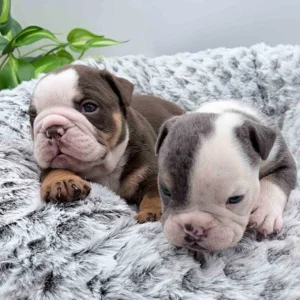
Everyday Ways to Support Healthy English Bulldog Breathing
A few simple habits can make a real difference in day-to-day comfort. Keeping your dog at a healthy weight reduces strain on an already compact airway, since PetMD’s breed health guide notes that excess weight can make BOAS symptoms noticeably worse, which ties directly into what to feed an English Bulldog at every life stage. Using a harness instead of a collar prevents added pressure on the neck and throat, and avoiding strenuous exercise in hot or humid weather gives your dog’s airway less work to do at the worst possible time.
A Note From Our Team
We have raised English Bulldogs long enough to know their normal breathing sounds by heart, and honestly, learning that range takes most new families a few weeks. What we always tell new owners is to get to know your own dog’s baseline while they are calm and resting, so you can tell right away if something changes. Airway soundness is also part of why English Bulldog lifespan varies so much from dog to dog. Every puppy that leaves Heart Strong Pups comes from parents we have observed closely for exactly this kind of airway soundness, and our health guarantee reflects how seriously we take it. If you have more questions before bringing a puppy home, our FAQ page covers many of the topics families ask about most.
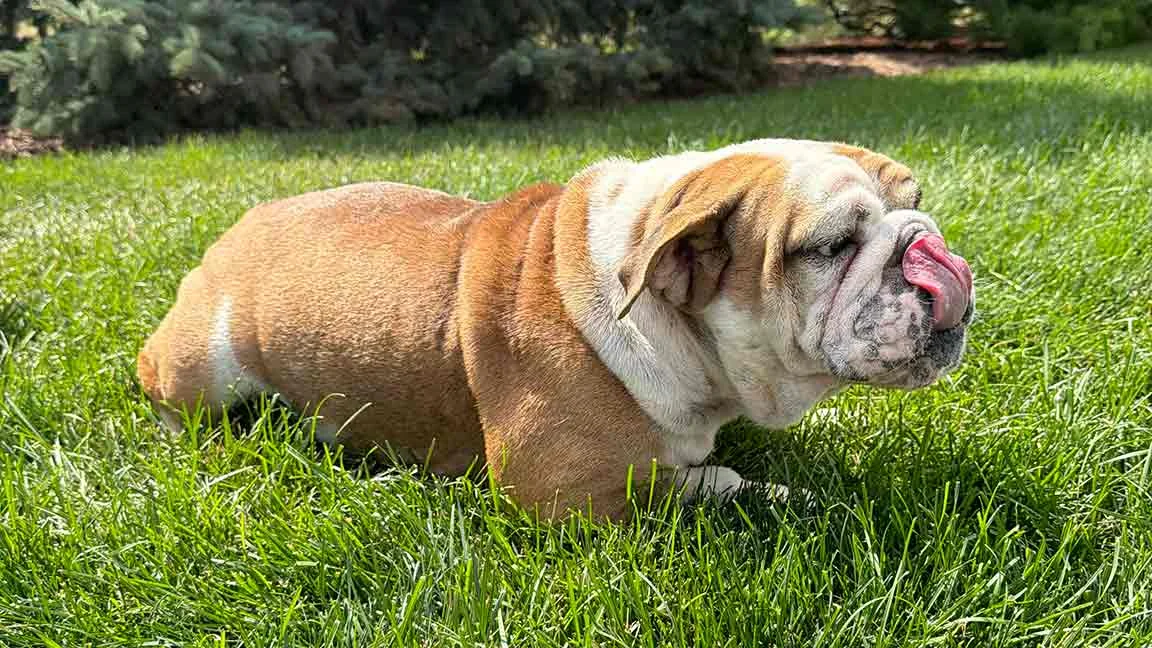
Frequently Asked Questions
Is it normal for English Bulldogs to snore loudly?
Yes, snoring and noisy breathing are common in English Bulldogs due to their short muzzle and soft palate structure, and on their own are not usually a cause for concern.
What color should my Bulldog’s gums be?
Healthy gums should be pink. Pale, blue, or gray gums are a sign of a breathing emergency and require immediate veterinary attention.
Can English Bulldog breathing problems be fixed with surgery?
In some cases yes. Procedures to widen narrow nostrils or shorten an elongated soft palate can significantly improve airflow in dogs with more severe BOAS symptoms.
Why do English Bulldogs struggle more in the heat?
Dogs cool themselves primarily through panting, and a Bulldog’s narrower airway makes that cooling process less efficient, which is why heat and humidity are especially hard on the breed.
Should I be worried about reverse sneezing?
Reverse sneezing looks alarming but is usually harmless. It typically resolves within a minute, though frequent episodes are worth mentioning to your vet.
Join our newsletter
Volutpat vel turpis nulla lorem sed semper. Aliquam sagittis sem libero viverra vehicula nullam ut nisl.
Related Posts
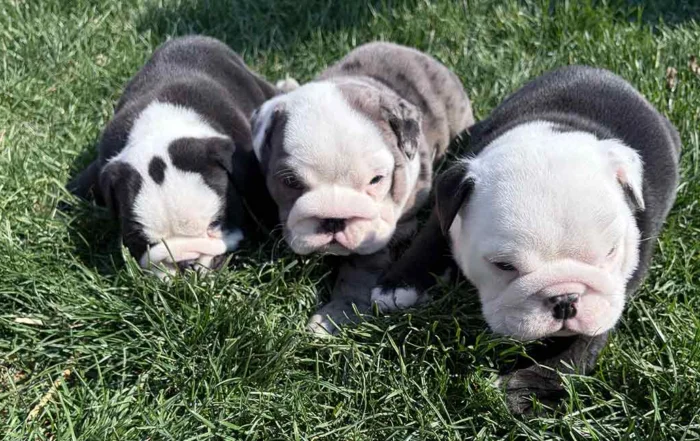
English Bulldog Breathing Problems: What’s Normal and What’s Not
2026-09-16T20:07:06+00:00By Emily H.|English Bulldogs|
English Bulldog Breathing Problems: What's Normal and What's Not Some noisy breathing, snoring, and grunting is normal for English [...]
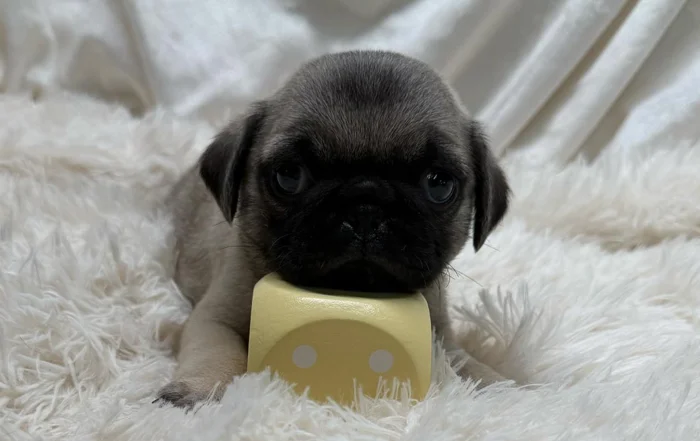
Pug vs French Bulldog: What’s the Difference?
2026-08-26T17:52:11+00:00By Emily H.|Pugs|
Pug vs French Bulldog: What's the Difference? Quick Answer: In the Pug vs French Bulldog comparison, Pugs tend to [...]
What Do Pugs Eat? A Feeding and Nutrition Guide
2026-08-19T22:26:58+00:00By Emily H.|Pugs|
What Do Pugs Eat? A Feeding and Nutrition Guide Quick Answer: What do Pugs eat for the best health? [...]
How Much Exercise Does a Pug Need?
2026-08-19T22:16:15+00:00By Emily H.|Pugs|
How Much Exercise Does a Pug Need? Quick Answer: Pug exercise needs are moderate: two short walks per day [...]