

Pug Dental Care: A Complete Teeth Care Guide
Quick Answer: Pug dental care means brushing your Pug’s teeth several times a week with a dog-safe toothpaste, offering dental chews, and scheduling regular veterinary cleanings, since Pugs are prone to crowded teeth and tartar buildup. At Heart Strong Pups, we start familiarizing puppies with mouth handling before they ever go home.
Pug dental care deserves more attention than most new owners expect, largely because of how this breed’s jaw is shaped. This guide covers everything you need to know to keep your Pug’s teeth healthy for life.
Why Pugs Need Extra Dental Attention
 Pugs have a shortened jaw that often leaves their teeth more crowded than breeds with longer muzzles. That crowding traps food particles and plaque more easily, and the AVMA notes that periodontal disease is the most common dental condition in dogs by age three, which is why consistent dental care matters, more for this breed than for many others.
Because the Pug skull is compressed compared to a longer-nosed breed, the same number of teeth that fit comfortably in a longer jaw are packed into a much smaller space. This means teeth can sit at odd angles or overlap slightly, creating tight gaps where plaque hides even with regular brushing. Retained baby teeth are also more common in small and toy breeds like the Pug, and a retained tooth sitting alongside an adult tooth creates an additional pocket for bacteria to collect.
For all of these reasons, we consider dental care as important as any other part of a Pug’s routine health maintenance, not an optional extra.
How Often to Brush Your Pug’s Teeth
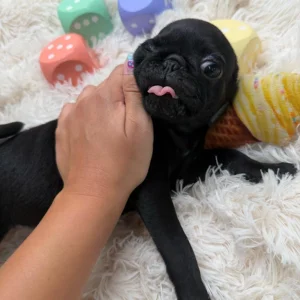
Ideally, Pug dental care includes brushing three to five times per week using a toothpaste made specifically for dogs, since human toothpaste can be harmful. A soft-bristled finger brush or small dog toothbrush works well for a Pug’s compact mouth.
Dental Chews and Diet Support
Dental chews, appropriately sized dental-formula kibble, and supervised chew toys all support dental care between brushings. These tools help mechanically scrape plaque before it hardens into tartar, though they should never fully replace brushing.
Signs of Dental Problems
Bad breath, visible tartar, red or bleeding gums, and reluctance to chew are all signs that pug dental care needs to become a bigger priority. Left unaddressed, dental disease can lead to tooth loss, pain, and infections that affect overall health.
What One Retained Tooth Taught Us
A few years ago, we placed a Pug puppy with a family who called us a couple months later a little worried because their puppy seemed to have two rows of teeth coming in near the front. We asked them to send a photo, and sure enough, it was a classic case of a retained baby tooth sitting right next to the adult tooth that had already come in behind it. We walked them through what to watch for and had them get their vet to check it at the puppy’s next visit, since a retained tooth that does not fall out on its own usually needs to be removed to prevent crowding and decay down the line. It turned out to be a simple, quick extraction, and their Pug’s adult teeth came in perfectly straight afterward. Now it is one of the first things we mention to every family, because most people have never heard of a retained tooth before it happens to their own puppy.

Professional Cleanings
Most Pugs benefit from a professional veterinary cleaning at least once a year, sometimes more often depending on how quickly tartar builds up. Combining professional cleanings with consistent at-home pug dental care is the most effective way to prevent serious dental disease.
How We Set Puppies Up for Success
Every Heart Strong Pups puppy is handled daily from birth, including gentle mouth and face touching, which makes at-home pug dental care far less stressful once a puppy goes home. Building that comfort early is part of the same early handling and desensitization routine we describe in Early Socialization: What Actually Matters.
Every puppy we place is also backed by our health guarantee, and we remain available to answer questions about care long after pickup day. You can also read more in our complete Pug companion guide.
Anesthesia Questions Owners Often Have
One of the most common concerns we hear about professional dental cleanings is anesthesia, and it is a fair question to ask, especially for a brachycephalic breed. A thorough cleaning that includes work below the gumline, where most dental disease actually develops, cannot be done safely on an awake, moving dog, which is why veterinarians recommend general anesthesia for a true dental cleaning rather than the anesthesia-free cleanings sometimes advertised at grooming salons.
Modern veterinary anesthesia protocols include pre-anesthetic bloodwork, careful monitoring throughout the procedure, and dosing tailored to the individual dog’s size and health status, all of which make the risk far lower than many owners assume, particularly when the alternative is allowing painful, progressive dental disease to continue untreated.
That said, it is reasonable to ask your veterinarian about anesthesia protocols specific to brachycephalic breeds before scheduling a cleaning, since airway management during and after anesthesia deserves extra attention in dogs with a shortened airway. A veterinarian experienced with Pugs and similar breeds will typically have a specific plan in place, including close monitoring during recovery until the dog is fully awake and breathing normally. Bringing up your Pug’s breed specifically when scheduling is a simple step that helps ensure the clinic is prepared.

Frequently Asked Questions
How often should I brush my Pug’s teeth?
Brushing three to five times per week with a dog-safe toothpaste is ideal for most Pugs, though daily brushing offers even better protection.
Do Pugs have more dental problems than other breeds?
Yes, their crowded jaw structure makes Pugs more prone to plaque buildup and dental disease than breeds with longer muzzles.
At what age should I start pug dental care?
Introducing gentle mouth handling and brushing as early as eight weeks helps puppies grow comfortable with dental care for life.
Are dental chews enough on their own?
No, dental chews help support pug dental care but should not replace regular brushing and professional cleanings.
Ready to Meet Your Pug?
If you are ready to add a Pug to your family, visit our Pug puppies page to see current and upcoming litters.
Related Posts
English Bulldog Ear Infections: Causes, Signs, and Prevention
English Bulldog Ear Infections: Causes, Signs, and Prevention English Bulldog ear infections are common due to the breed's rose [...]
English Bulldog Breathing Problems: What’s Normal and What’s Not
English Bulldog Breathing Problems: What's Normal and What's Not Some noisy breathing, snoring, and grunting is normal for English [...]
Pug vs French Bulldog: What’s the Difference?
Pug vs French Bulldog: What's the Difference? Quick Answer: In the Pug vs French Bulldog comparison, Pugs tend to [...]
What Do Pugs Eat? A Feeding and Nutrition Guide
What Do Pugs Eat? A Feeding and Nutrition Guide Quick Answer: What do Pugs eat for the best health? [...]