How Big Does a Pug Get? What Their Size Really Means
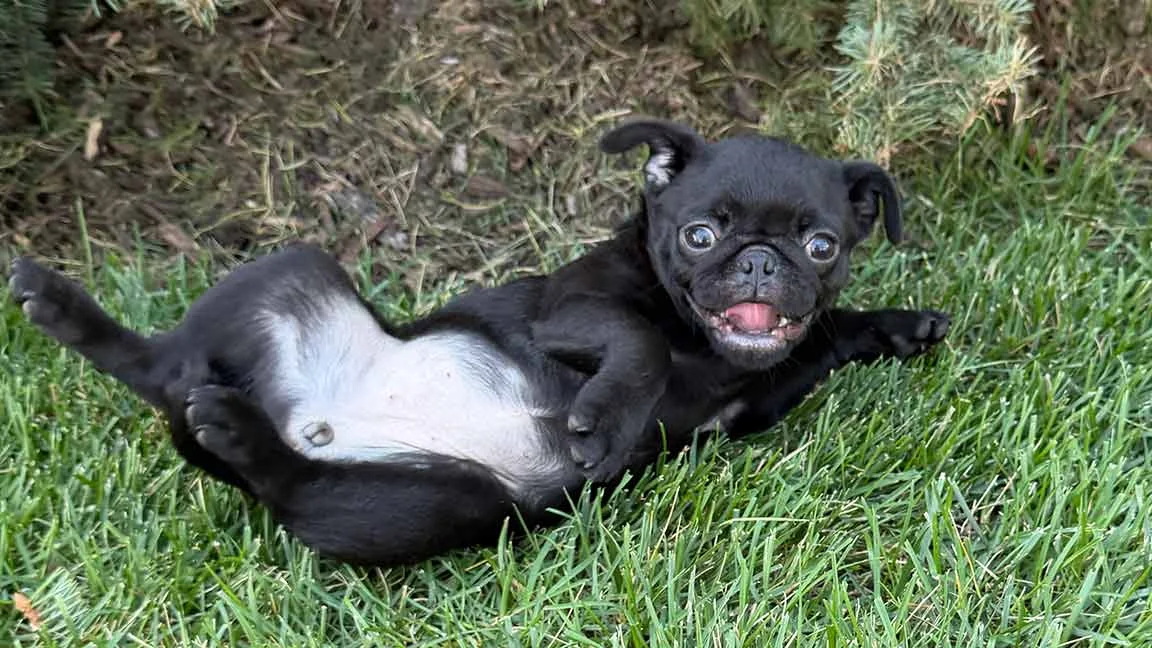
How big does a Pug get? Most adult Pugs land between 14 and 18 pounds and stand about 10 to 13 inches tall. But if you stop there, you’re missing the point. With this breed, size is not just about height and weight. It’s about structure, balance, and how that dog lives day to day.
At Heart Strong Pups, we’ve worked with Pugs long enough to know that two dogs can weigh the same and feel completely different. One can be well-built and athletic. The other can feel fragile or overly heavy. That difference comes down to how they’re bred and raised, not just the number on a scale.
A Closer Look at Pug Size
 On paper, Pug size is straightforward. In real life, it’s a little more layered.
Most healthy Pugs fall into this range:
- 14 to 18 pounds
- 10 to 13 inches tall
- Compact, square-shaped body
- Noticeable muscle under a smooth coat
What surprises most people is how solid they feel. You expect something light and delicate, and instead you get a small dog with real weight and presence.
That’s exactly how they should be.
A properly bred Pug is not flimsy. They are built to move, play, and live alongside a family without constant fragility.
Why Some Pugs Look Bigger or Smaller
If you’ve ever wondered why one Pug looks noticeably bigger than another, even when they’re technically the same breed, you’re asking the right question.
When people search how big does a Pug get, they’re often noticing differences that come from:
- Breeding priorities
- Body proportions, not just weight
- Early growth and the daily care routine during those first months at home
A taller, leaner Pug might look “bigger” than a shorter, stockier one, even if they weigh the same. On the flip side, a poorly structured Pug can look oversized simply because of excess weight rather than a healthy build.
At Heart Strong Pups, we focus on consistency. That means producing dogs with a predictable, balanced Pug size that reflects proper structure, not extremes.
The Growth Timeline Most People Don’t Expect
Pugs grow quickly at first, then slow down in a way that can catch new owners off guard.
If you’re trying to understand how big does a Pug get over time, here’s the typical pattern:
- 0 to 6 months: rapid growth, noticeable size changes every few weeks
- 6 to 12 months: height levels out, body still developing
- 12 to 18 months: muscle fills in, chest broadens, final Pug size becomes clear
This is why a one-year-old Pug might still look slightly “unfinished.” They’re close, but not quite there yet.
The Difference Between Healthy and Unhealthy Size
 Here’s where things get a little more real.
Not every Pug you see represents a healthy standard. Some are too thin. Others are overweight. And some are bred in ways that prioritize appearance over long-term health.
When asking how big does a Pug get, it’s worth asking a better question: what size is actually healthy?
A healthy Pug size should allow for:
- Easy movement without strain
- Comfortable breathing
- Strong, stable joints
- A balanced body that is neither underweight nor carrying excess fat
Anything outside of that range, especially when it’s intentional, usually leads to problems down the road.
The Truth About “Teacup” and Oversized Pugs
Let’s clear this up, because it confuses a lot of buyers.
There is no legitimate “teacup” Pug standard.
Dogs marketed that way are typically bred smaller than they should be, which can lead to:
- Increased respiratory issues
- More fragile bone structure
- Higher long-term health risks
On the other hand, oversized Pugs often struggle with weight-related stress on joints and breathing.
A balanced Pug size is not accidental. It is the result of responsible breeding decisions, and it is also a big part of what you are paying for when you choose a well-priced puppy over a suspiciously cheap one.
How Pug Size Affects Everyday Life
 This is where size actually matters.
A big reason people ask “How big does a Pug get?” is that they’re trying to picture life with one. And honestly, this is where Pugs shine.
Their size makes them incredibly adaptable:
- Small enough to live comfortably in apartments
- Sturdy enough for playtime with kids
- Easy to lift, travel with, and manage
- Low space requirements compared to larger breeds
They’re not a dog that takes over your home. They fit into it, and their temperament is a big part of why that works so well in practice.
At the same time, they’re not so small that you feel like you need to handle them carefully all the time. That balance is part of what makes their Pug size so ideal.
Male vs Female Size Differences
There is a slight difference between males and females, but it’s not dramatic.
- Males tend to be a bit heavier and broader
- Females are often slightly lighter and more compact
In most cases, personality and energy level will matter far more than the difference in Pug size when choosing a puppy. How well that energy and personality is shaped through early training also plays a bigger role in daily life than most people expect.
What Pug size looks like at each stage of life
One of the most common questions we get from families is what to expect as their puppy grows. Here is a realistic picture:
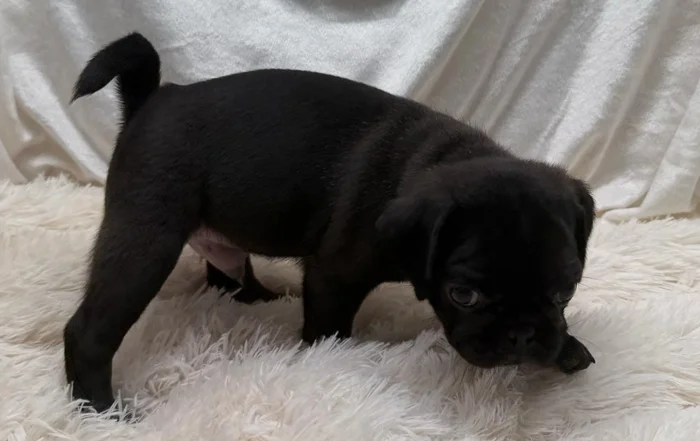
Weeks 8 to 12: Your puppy will feel surprisingly small, often between 2 and 4 pounds. Their head will look slightly oversized for their body, which is completely normal.
Months 3 to 6: Rapid growth. You will notice size changes week to week. This is when their personality really starts to show alongside their developing body.
Months 6 to 12: Height stabilizes. The body continues filling out, and the chest begins to broaden.
12 to 18 months: Muscle development completes. This is when a well-bred Pug settles into that solid, balanced build that the breed is known for.
Every puppy develops at their own pace, but this general timeline holds true for most well-bred Pugs from our program.
Why Size Reflects Breeding Quality
This is the part most people overlook.
When you ask “How big does a Pug get?”, you’re also indirectly asking about the quality of the breeder.
At Heart Strong Pups, size is not something we guess at or leave to chance. It comes from:
- Carefully selected parent dogs with proper structure
- Health testing and responsible pairing
- Raising puppies with proper nutrition and care from the start
When those pieces are in place, the Pug size ends up exactly where it should be without forcing it. What most people do not realize is that the environment plays a role too. Puppies raised in a clean, low-stress space with proper nutrition from week one develop more consistently than those raised in chaotic or crowded conditions. Our state-inspected Ohio facility is built around that understanding, and it shows up in the balance and structure of every puppy we place.
Questions worth asking any breeder about Pug size
Size is one of the easiest ways to assess a breeder’s priorities. Before committing, consider asking:
- How much do your parent dogs weigh, and can I see them?
- Have any puppies from past litters been significantly outside the standard size range?
- What nutrition plan do you use during the puppy’s early weeks?
- Do you track growth and development during the nursery period?
At Heart Strong Pups, we welcome every one of these questions. Transparency about size and structure is part of how we earn the trust of the families we work with.
Final Thoughts
So, how big does a Pug get? Small enough to fit almost anywhere, but strong enough to be a true, everyday companion.
That balance is what you’re really looking for. Not the smallest dog. Not the biggest. Just a well-built, healthy Pug with the right Pug size for a long, comfortable life. And that size, when it comes from responsible breeding, is one of the things that supports a full, healthy lifespan.
At Heart Strong Pups, that is always the goal. Every puppy we place comes from AKC-registered, health-cleared parents and includes a one-year health guarantee covering significant congenital or hereditary conditions. If you are ready to find the right Pug for your family, browse our available puppies or reach out to us directly. We are happy to help you find the right fit.
FAQ
How big does a Pug get at full size?
Most adult Pugs weigh between 14 and 18 pounds and stand around 10 to 13 inches tall.
Does Pug size vary between dogs?
Yes, but a well-bred Pug should stay within a consistent, healthy range without extreme differences.
When do Pugs stop growing?
Pugs usually reach their full height by 9 to 12 months and finish developing their full body by about 18 months.
Is a smaller Pug healthier?
No. Pugs bred to be unusually small often face more health issues than standard-sized dogs.
Is Pug size good for small homes?
Yes. Their compact size and adaptable personality make them a great fit for apartments and smaller living spaces.
What is the average weight of a Pug at 6 months?
Most Pugs weigh somewhere between 7 and 12 pounds at 6 months, though this varies depending on individual development and breeding. They are usually close to their full height by this point but still have several months of muscle and body development ahead.
Do male and female Pugs differ much in size?
The difference is modest. Males typically land closer to the higher end of the 14 to 18 pound range, while females tend to be slightly lighter and more compact. Both fall within the same general size standard.
Can a Pug’s size tell you anything about their health?
Yes. A well-proportioned Pug at a healthy weight tends to move comfortably, breathe easily, and stay active through all life stages. Pugs that are significantly underweight, overweight, or unusually small are more likely to face health challenges, which is why responsible breeding and proper nutrition matter so much.
Related Posts
English Bulldog Breathing Problems: What’s Normal and What’s Not
English Bulldog Breathing Problems: What's Normal and What's Not Some noisy breathing, snoring, and grunting is normal for English [...]
Pug vs French Bulldog: What’s the Difference?
Pug vs French Bulldog: What's the Difference? Quick Answer: In the Pug vs French Bulldog comparison, Pugs tend to [...]
What Do Pugs Eat? A Feeding and Nutrition Guide
What Do Pugs Eat? A Feeding and Nutrition Guide Quick Answer: What do Pugs eat for the best health? [...]
How Much Exercise Does a Pug Need?
How Much Exercise Does a Pug Need? Quick Answer: Pug exercise needs are moderate: two short walks per day [...]